Have you ever wanted your own bouldering gym? Ever look into buying all of the holds!? Yeah, that can get pricey. We have completed our 3 part series on making your own inexpensive rock climbing holds. They look and feel like the professional ones at a fraction of the cost. We estimate that each hold uses $5 or less in material cost to make! That's awesome. Plus you get to make your own creations. Whatever design, size, or color, you can think of- it's yours. Check out our hold page to see our creations using this technique.
After searching the internet for how-to's and tips on making our own holds, we were left with bits and pieces of the process. We were determined to figure it out anyways. After trial and error, we learned the process and are now successfully climbing on our own holds. We have decided to share our knowledge in one centralized location. With any luck, you can recreate our process and can soon be climbing on your own holds. Don't let the process scare you, it's really not very difficult.
We hope you enjoy and have great success with creating your own holds. If you do make some, please share with us pictures and stories of your adventure. If you have any tips or tricks from making your own holds, share those too. We're no experts and would love to learn anything that makes the process cheaper, easier, or generally better.
Start with Part 1 where you make a foam hold
Then create your silicone mold in Part 2
Finish by casting a resin hold in Part 3
(or you could always try the parts in reverse... I doubt it would work though...)
-Jonathan, Phil, Cameron
Showing posts with label bouldering. Show all posts
Showing posts with label bouldering. Show all posts
Thursday, February 23, 2012

Homemade Rock Climbing Holds Part 3- Casting Resin Holds

Starting supplies for casting a hold
We're so close!
It's time to begin the final stages of creating a homemade climbing hold. In the photo above, you can see the supplies you'll need (minus the sand). You can find the fiberglass resin at any hardware store. It is a liquid that when mixed with the fixer (included with the resin) hardens. It is typically used in boat or car body repair in layers on top of fiberglass sheets. The can above cost us 36 dollars and cast about 30 holds. Of course your mileage will differ based on the size of your holds.
Next to the resin we have acrylic paint. This is one method of adding color to the holds. Another way is by using dyed sand.
Adding about a teaspoon of acrylic paint will give you some pretty good color. We have found that different colors have different drying times. So when using mixed colors- better just leave it to set for extra long to be safe.

For a more vibrant color, you can use dyed sand. This is usually finer and we like the finish of these holds better. It is more costly. A bag of colored sand (found at a hobby store) will be about 5 bucks for a pound. The other fine silica sand we have used on the majority of our holds was 6 bucks for 80 pounds. We have not been able to find white fine grade silica sand locally. This is used in pool filtration systems and may be the best option.

We have also had success adding glitter to make "fancy" holds. Pretty!
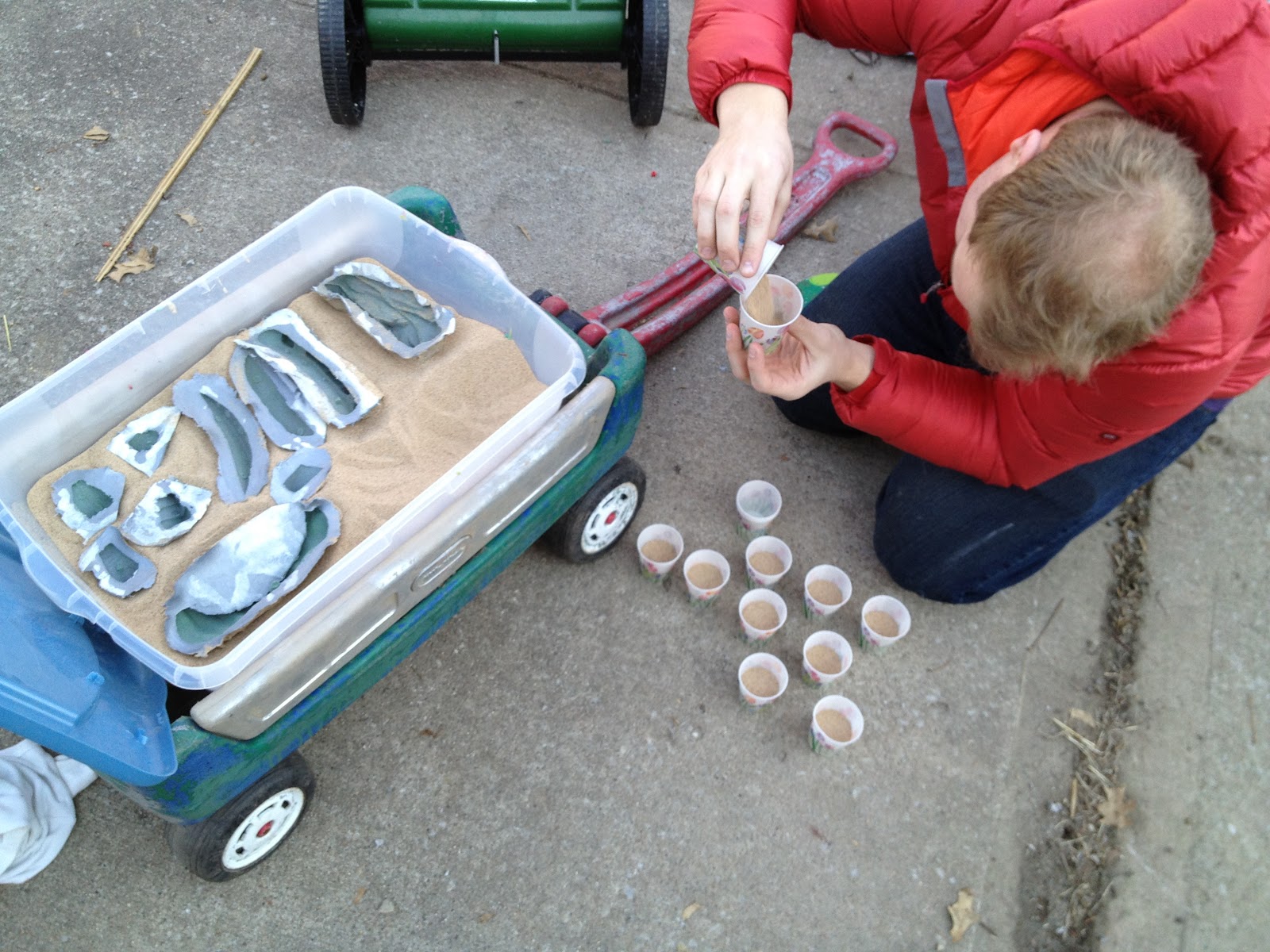
Which ever sand you are using get about 2.5oz in a 5oz Dixie cup. You can measure how much sand a hold will need by filling the mold with sand and then pouring it into the cups. If you follow this method you will end up with a little too much (because of the added volume of resin). You can sort of cheat the amount down maybe 20%. None of this is an exact science, so don't sweat over the measurements. We typically have extra small foot holds that we use any left over mixture in so we don't waste it. Hopefully our pictures will help.

Now you can add the resin into the cup. We try to add 50:50 sand and resin. We use the artwork on the cups as measurements to stay consistent from cup to cup.
Note: the sand is actually not giving the hold its texture. It is merely a filler for the resin.This saves on the cost of resin and can give color if dyed.
Wednesday, February 22, 2012
How to - Climbing Technique
We're no experts in climbing. I'll be the first to admit that. But we're learning, and we're trying to get better. Even if we were experts, we'd still be trying to get better. In an effort to learn and grow, I found this retro (if 1993 would be considered retro) video explaining some basic technique in climbing. Though outdated in clothing style, I think the content is quite relevant.
Essentially you can throw yourself at a wall, and sometimes you'll stick. But if you want to go from playing vertical twister to doing yoga up a wall, you'll need to understand these concepts.
I particularly think it is important to think of your whole body in every move. How does your body's momentum shift? How do your feet move when you reach? How do your hips twist as you climb? How aware are you of your next hold? Do you need to look down to find your next foot, or does your mind's eye remember? How can you climb so that those watching will think, "that looks easy!"?
Try to make it to the end of the video. I know it's a somewhat lengthy video for YouTube, but the very last segment is my favorite. It's about climbing blind. I'm vary interested in this as an exercise to increase your body's awareness. There are some routes where I have pretty good muscle memory. Maybe I'll give them a shot with my eyes closed and see how it goes!
-Jonathan
I take no credit for this video. If you would like to see more, check out therealudini's YouTube channel.
Monday, January 30, 2012
The Homegrown Beta
When we first began, out backyard gym was nothing more than an old woodworking shed and some excess plywood from an eagle scout project. As we began to build, we decided to invest more time, effort and money to make a more functioning bouldering gym. It will also serve as a proving grounds for our homemade climbing holds. As we worked, we looked online for inspiration and guidance. Through many disjointed articles, videos, and some trail and error, we have built a pretty fun and functioning bouldering wall as well as some surprisingly good homemade holds. Now that we have something to show for our work, we are creating this blog as a place for DIY rock climbers like ourselves to learn from our experience. We plan to walk you through our gym construction, creating your own holds and other related information with enough detail to recreate what we have created. Hopefully this will become a destination for others hoping to learn and share the homegrown approach.
-Jonathan, Phil, and Cameron
Subscribe to:
Comments (Atom)